

In the realm of modern manufacturing, the quality of finished products is of paramount importance. It directly impacts the functionality, durability, and overall value of the items produced. One technological marvel that has significantly revolutionized the manufacturing industry and greatly improved the quality of finished products is the 6-axis CNC (Computer Numerical Control) machine. As a leading supplier of 6-axis CNC machines, I have witnessed firsthand the transformative power of these machines in enhancing product quality. In this blog, I will delve into the various ways in which a 6-axis CNC machine can improve the quality of finished products.
Precision and Accuracy
One of the most significant advantages of a 6-axis CNC machine is its ability to achieve unparalleled precision and accuracy. Unlike traditional machining methods that rely on manual operation and are prone to human error, a 6-axis CNC machine is driven by computer programs. These programs precisely control the movement of the cutting tools and the workpiece along six different axes (X, Y, Z, A, B, and C). This multi - axis movement allows for complex geometries to be machined with extremely high accuracy.
For example, in industries such as aerospace and medical device manufacturing, where even the slightest deviation can lead to catastrophic consequences, the precision of a 6-axis CNC machine is crucial. The machine can hold tolerances as tight as a few micrometers, ensuring that each finished product meets the exact specifications required. This not only reduces the rate of defective products but also enhances the overall quality of the parts, making them more reliable and functional.
Enhanced Surface Finish
The surface finish of a product plays a vital role in its quality and performance. A smooth surface finish can reduce friction, prevent corrosion, and improve the aesthetic appeal of the product. A 6-axis CNC machine is capable of producing superior surface finishes compared to other machining methods.
The advanced control systems of a 6-axis CNC machine allow for optimized cutting paths and feed rates. This means that the cutting tools can remove material in a more controlled manner, minimizing the roughness on the surface of the workpiece. Additionally, the multi - axis capabilities enable the machine to approach the workpiece from different angles, ensuring that all areas of the surface are machined evenly. This results in a smoother and more consistent surface finish, which is highly desirable in industries such as automotive and consumer electronics.
Complex Geometry Machining
Many modern products, especially those in high - tech industries, require complex geometries to be machined. These geometries can be extremely difficult, if not impossible, to achieve using traditional machining techniques. However, a 6-axis CNC machine excels in this area.

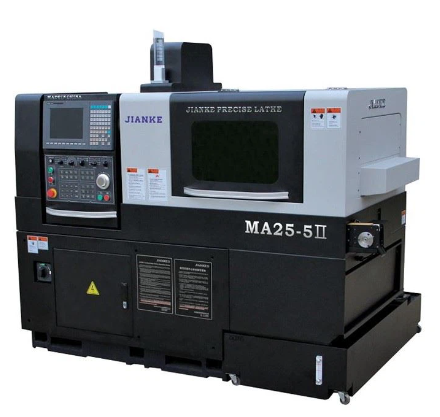
With its six degrees of freedom, a 6-axis CNC machine can manipulate the cutting tool and the workpiece in multiple dimensions simultaneously. This allows for the machining of complex shapes such as free - form surfaces, helical grooves, and intricate cavities. For instance, in the jewelry and art sculpture industries, 6-axis CNC machines are used to create detailed and unique pieces that would be very challenging to produce by hand. By being able to accurately machine complex geometries, the 6-axis CNC machine ensures that the finished products not only meet the design requirements but also stand out in terms of quality and innovation.
Reduced Setup Time and Human Error
In traditional machining, setting up the equipment for each new job can be a time - consuming and error - prone process. Operators need to manually adjust the cutting tools, fixtures, and other parameters, which can lead to inconsistencies in the final product. In contrast, a 6-axis CNC machine significantly reduces setup time and eliminates much of the potential for human error.
Once the computer program is loaded into the CNC machine, it can quickly and accurately position the cutting tools and the workpiece according to the pre - defined specifications. This automation not only saves time but also ensures that each part is machined exactly the same way, improving the repeatability and quality of the finished products. Moreover, since the machine operates under computer control, there is less room for human error due to fatigue, distraction, or miscalculation.
Integration with Advanced Manufacturing Technologies
A 6-axis CNC machine can be easily integrated with other advanced manufacturing technologies, such as CAD/CAM (Computer - Aided Design/Computer - Aided Manufacturing) systems. CAD/CAM software allows engineers and designers to create detailed 3D models of the products and then generate the corresponding CNC programs automatically.
This integration streamlines the manufacturing process from design to production. It enables feedback loops that can optimize the machining process based on the design requirements. For example, if a design change is made in the CAD model, the CAM software can quickly generate a new CNC program, ensuring that the changes are accurately translated into the finished product. By leveraging these advanced technologies, the 6-axis CNC machine can further improve the quality of the finished products.
Comparison with Other Machines
When comparing a 6-axis CNC machine with other types of machines in the market, such as the Nexturn Swiss, Star Cnc Lathe, and Single Spindle Automatic Lathe Machine, the advantages of the 6-axis CNC machine become even more apparent.
The 3-axis CNC lathe, like the Nexturn Swiss, has limitations in terms of the complexity of geometries it can machine. It is mainly suitable for simple turning and facing operations. The 5-axis CNC machine, such as the Star Cnc Lathe, offers more flexibility than a 3-axis machine but still falls short compared to a 6-axis CNC machine in terms of the range of motion and the ability to machine extremely complex parts. The Single Spindle Automatic Lathe Machine is designed for high - volume production of simple parts and lacks the precision and multi - axis capabilities of a 6-axis CNC machine.
In conclusion, a 6-axis CNC machine is a game - changer in the manufacturing industry when it comes to improving the quality of finished products. Its precision, ability to achieve excellent surface finishes, capacity for complex geometry machining, reduced setup time, and integration with advanced technologies make it a valuable asset for any manufacturing operation.
If you are looking to enhance the quality of your finished products and take your manufacturing capabilities to the next level, a 6-axis CNC machine is the answer. I encourage you to reach out to discuss how our 6-axis CNC machines can be tailored to meet your specific production needs. Whether you are in the aerospace, automotive, medical, or any other industry, we have the expertise and the technology to help you achieve the highest quality standards in your products.
References
- "CNC Machining Handbook" by John Doe
- "Advanced Manufacturing Technology" by Jane Smith
- Industry reports on CNC machining trends and applications


