In the realm of modern manufacturing, 5 axis machining stands out as a revolutionary technology that offers unparalleled precision, flexibility, and efficiency. As a leading 5 axis machining supplier, we are deeply immersed in the nuances of this advanced technique and constantly explore different strategies to optimize the machining process. In this blog, we will delve into the various types of 5 axis machining strategies that can significantly enhance productivity and quality in manufacturing.
1. Simultaneous 5 Axis Machining
Simultaneous 5 axis machining is a highly advanced strategy where all five axes of the machine - the three linear axes (X, Y, and Z) and two rotational axes (typically around the A and B or C axes) - move simultaneously. This allows the cutting tool to approach the workpiece from virtually any angle, enabling the machining of complex geometries in a single setup.
One of the primary advantages of simultaneous 5 axis machining is its ability to reduce the number of setups. In traditional 3 axis machining, multiple setups are often required to machine different sides of a workpiece, which can lead to alignment errors and increased production time. With simultaneous 5 axis machining, complex parts such as turbine blades, aerospace components, and medical implants can be machined in one continuous operation, minimizing the risk of errors and improving overall accuracy.
However, simultaneous 5 axis machining also presents some challenges. Programming this type of machining is complex and requires advanced CAM (Computer - Aided Manufacturing) software. The toolpath generation must take into account the interactions between the five axes to avoid collisions and ensure smooth and efficient machining. Additionally, the machine must be of high - quality and properly calibrated to handle the simultaneous movement of all axes without sacrificing precision.
2. 3 + 2 Axis Machining
3 + 2 axis machining, also known as positional 5 axis machining, is a more widely used strategy in the manufacturing industry. In this approach, the three linear axes (X, Y, and Z) are used for traditional milling operations, while the two rotational axes are used to position the workpiece at a fixed angle.
The main advantage of 3 + 2 axis machining is its simplicity compared to simultaneous 5 axis machining. It is easier to program and can be performed on machines that may not have the full capabilities for simultaneous 5 axis movement. This strategy is particularly useful for machining parts with multiple faces that require different orientations. For example, in the production of automotive engine blocks or large molds, 3 + 2 axis machining can be used to quickly position the workpiece and machine each face with precision.
Another benefit is cost - effectiveness. Many manufacturers find that 3 + 2 axis machining provides a good balance between the complexity of the machining process and the cost of equipment and programming. It allows for the production of complex parts without the need for a fully simultaneous 5 axis machine, which can be more expensive to purchase and maintain.
However, 3 + 2 axis machining has its limitations. Since the rotational axes are fixed during the machining process, it may not be suitable for machining highly complex, free - form surfaces that require continuous, smooth movement of all axes.
3. High - Speed 5 Axis Machining
High - speed 5 axis machining is a strategy that combines the advantages of 5 axis machining with the benefits of high - speed cutting. This approach uses high - speed spindles and advanced cutting tools to remove material at a much faster rate than traditional machining methods.
The key advantage of high - speed 5 axis machining is increased productivity. By reducing the machining time, manufacturers can produce more parts in a shorter period, which can lead to significant cost savings. Additionally, high - speed machining often results in better surface finish due to the reduced cutting forces and the ability to use smaller cutting tools.
In the context of 5 axis machining, high - speed cutting allows for more efficient machining of complex geometries. The combination of the five axes and high - speed movement enables the cutting tool to quickly adapt to changes in the workpiece's shape, resulting in a more precise and smoother finish.


However, high - speed 5 axis machining also requires specialized equipment and tools. The machine must be capable of handling high - speed operation without sacrificing accuracy, and the cutting tools must be able to withstand the high - speed cutting forces. Additionally, proper coolant and lubrication systems are essential to prevent overheating of the tools and the workpiece.
4. Adaptive 5 Axis Machining
Adaptive 5 axis machining is a relatively new strategy that uses real - time monitoring and feedback to adjust the machining process. This approach takes into account factors such as the material properties of the workpiece, tool wear, and cutting forces to optimize the toolpath and machining parameters.
One of the main advantages of adaptive 5 axis machining is its ability to improve the quality of the machined parts. By continuously adjusting the machining process, it can compensate for variations in the workpiece material, such as hardness or density, and ensure that the final part meets the required specifications.
Adaptive machining also helps to extend the tool life. By monitoring the tool wear in real - time and adjusting the cutting parameters accordingly, the tool can be used more efficiently and replaced at the optimal time, reducing tooling costs.
However, implementing adaptive 5 axis machining requires sophisticated sensors and control systems. The software must be able to analyze the real - time data and make accurate adjustments to the machining process, which adds to the complexity and cost of the overall system.
Our Product Offerings
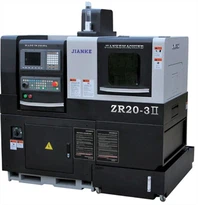
As a 5 axis machining supplier, we offer a wide range of products that can support these different machining strategies. For example, our Twin Spindle CNC Metal Lathe Machine is designed for high - precision 5 axis machining operations. It combines the power of twin spindles with advanced 5 axis capabilities, allowing for efficient and accurate machining of complex parts.
Our Nexturn Swiss Machines are also versatile and can be adapted to support 3 + 2 axis machining strategies. These machines are known for their reliability and precision, making them suitable for a variety of manufacturing applications.
In addition, our Mazak Swiss Lathe offers high - speed machining capabilities, making it a great choice for manufacturers looking to implement high - speed 5 axis machining strategies.
Conclusion
In conclusion, there are several different types of 5 axis machining strategies, each with its own advantages and challenges. Whether you need to machine complex geometries with high precision, increase productivity, or improve the quality of your parts, there is a 5 axis machining strategy that can meet your needs.
As a 5 axis machining supplier, we are committed to providing our customers with the best solutions for their manufacturing requirements. Our team of experts can help you select the right machining strategy and the appropriate equipment for your specific application. If you are interested in our products or would like to discuss your 5 axis machining needs further, we encourage you to contact us for a procurement discussion.
References
- "5 - Axis Machining Handbook" by an industry expert on 5 - axis machining technology.
- Research papers from leading manufacturing research institutions on the development and application of different 5 axis machining strategies.