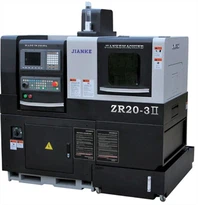
Hey there! As a supplier of precision lathe machines, I get a ton of questions about how these bad boys work. One question that pops up quite often is, "What is the chip removal method of a precision lathe machine?" Well, you're in luck because I'm about to break it down for you.
Why Chip Removal Matters
Before we dive into the actual methods, let's talk about why chip removal is so important. When you're using a precision lathe machine to cut, shape, or bore metal, you're generating a whole bunch of chips. If these chips aren't removed properly, they can cause a whole host of problems. For starters, they can interfere with the cutting process, leading to poor surface finish and inaccuracies in the machined part. They can also cause overheating, which can damage the cutting tool and the workpiece. And let's not forget about the safety aspect - flying chips can be a real hazard to operators.
Different Chip Removal Methods
Gravity Chip Removal
The simplest and most straightforward method is gravity chip removal. In this method, the chips fall directly into a chip tray or a hopper located below the cutting area. Gravity does all the work, pulling the chips down as they're generated. This method is often used in smaller, less complex lathe machines where the cutting forces are relatively low and the chips aren't too large or heavy.
The main advantage of gravity chip removal is its simplicity. There are no additional moving parts or complex systems to maintain, which means less downtime and lower maintenance costs. However, it also has its limitations. For one thing, it only works well for chips that are small enough to fall freely and not get stuck in the cutting area. And if the cutting process generates a lot of chips, the chip tray may need to be emptied frequently, which can be a hassle.
Conveyor Chip Removal
For larger and more powerful lathe machines, conveyor chip removal is a popular choice. In this method, a conveyor belt is installed below the cutting area to collect and transport the chips away from the machine. The conveyor can be a flat belt, a chain conveyor, or a screw conveyor, depending on the type of chips being generated and the specific requirements of the machine.
One of the biggest advantages of conveyor chip removal is its efficiency. It can handle a large volume of chips continuously, reducing the need for frequent manual cleaning. It also allows for easy chip collection and disposal, as the chips can be transported directly to a storage container or a recycling bin. However, conveyor systems can be more expensive to install and maintain than gravity chip removal systems, and they require more space.
Coolant-Assisted Chip Removal
Coolant isn't just for keeping the cutting tool and the workpiece cool - it can also play a crucial role in chip removal. In coolant-assisted chip removal, a high-pressure coolant is sprayed onto the cutting area to flush the chips away. The coolant can be water-based or oil-based, depending on the type of material being machined and the specific requirements of the cutting process.
The main advantage of coolant-assisted chip removal is its effectiveness. The high-pressure coolant can break up and flush out even the most stubborn chips, ensuring a clean cutting area and a smooth machining process. It also helps to reduce heat and friction, which can extend the life of the cutting tool and improve the surface finish of the machined part. However, using coolant requires a separate coolant system, which can add to the cost and complexity of the machine. And let's not forget about the environmental and safety concerns associated with coolant disposal.
Vacuum Chip Removal
Vacuum chip removal is another option for precision lathe machines. In this method, a vacuum system is used to suck the chips away from the cutting area and into a collection container. The vacuum system can be either built into the machine or a separate unit that's connected to the machine.
One of the advantages of vacuum chip removal is its ability to collect chips from hard-to-reach areas. The vacuum can reach into small crevices and corners, ensuring that all the chips are removed. It also helps to keep the work area clean and free of dust, which can be beneficial for the health and safety of the operators. However, vacuum systems can be noisy and require regular maintenance to ensure optimal performance.
Our Precision Lathe Machine Offerings
Now that you know about the different chip removal methods, let's talk about our precision lathe machines. We offer a wide range of lathe machines to suit different needs and budgets.
If you're looking for a high-performance machine that can handle complex machining tasks, check out our Double Spindle CNC Lathe For Processing Metal. This machine is equipped with advanced chip removal systems to ensure efficient and effective chip removal, allowing you to achieve precise and high-quality machining results.
For those who need a machine with high-speed and multi-axis capabilities, our High Speed 5 Axis Cnc Machine Center is the perfect choice. It comes with state-of-the-art chip removal technology to keep the cutting area clean and the machining process smooth.
And if you're on a budget but still need a reliable lathe machine, our Single Spindle Automatic Lathe is a great option. It offers a simple yet effective chip removal method that's easy to maintain and operate.


Contact Us for Procurement
If you're interested in learning more about our precision lathe machines or any of our other products, we'd love to hear from you. Whether you're a small workshop or a large manufacturing plant, we have the right solution for you. Contact us today to start the procurement process and take your machining operations to the next level.
References
- "Fundamentals of Machining and Machine Tools" by Edward H. Brandt
- "CNC Machining Handbook" by Mark Billinghurst