

As a supplier of 6-axis machines, I am often asked about the kinematic structure of these remarkable pieces of equipment. In this blog post, I will delve into the intricacies of the kinematic structure of a 6-axis machine, explaining its components, functions, and advantages.
Understanding the Basics of Kinematics
Before we dive into the specifics of a 6-axis machine, it's important to have a basic understanding of kinematics. Kinematics is the branch of mechanics that deals with the motion of objects without considering the forces that cause the motion. In the context of a 6-axis machine, kinematics refers to the way the machine moves and the relationship between its different axes.
The Six Axes of a 6-Axis Machine
A 6-axis machine, as the name suggests, has six degrees of freedom of motion. These axes are typically labeled as X, Y, Z, A, B, and C. Let's take a closer look at each of these axes:
- X, Y, and Z Axes: These are the linear axes that control the movement of the machine along the three primary dimensions of space - length, width, and height. The X-axis usually controls the left - right movement, the Y-axis controls the forward - backward movement, and the Z-axis controls the up - down movement. For example, in a machining operation, these axes are used to position the cutting tool precisely over the workpiece.
- A, B, and C Axes: These are the rotational axes. The A-axis typically rotates around the X-axis, the B-axis rotates around the Y-axis, and the C-axis rotates around the Z-axis. These rotational axes allow for complex machining operations such as milling at different angles, drilling holes in non - planar surfaces, and creating intricate 3D shapes.
Components of the Kinematic Structure
The kinematic structure of a 6-axis machine is composed of several key components that work together to enable smooth and precise motion.
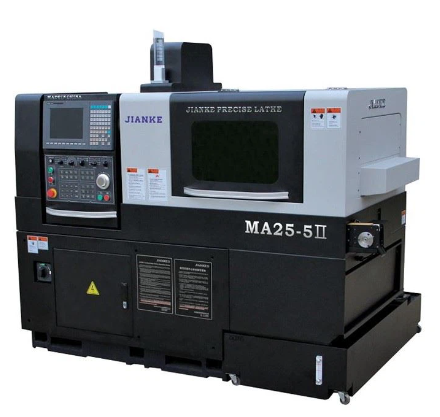

- Linear Guides: These are used to guide the linear movement of the machine along the X, Y, and Z axes. High - quality linear guides ensure low friction, high stiffness, and accurate positioning. They are usually made of hardened steel or aluminum and are designed to withstand heavy loads.
- Ball Screws or Linear Motors: These are responsible for converting rotational motion into linear motion. Ball screws are a common choice in many 6-axis machines. They consist of a screw shaft and a nut with ball bearings in between. When the screw shaft rotates, the nut moves linearly along the shaft. Linear motors, on the other hand, provide direct linear motion without the need for mechanical transmission elements, resulting in higher speeds and better dynamic performance.
- Rotary Tables and Swiveling Heads: These components are used to achieve the rotational motion around the A, B, and C axes. Rotary tables can rotate a workpiece or a tool around a fixed axis, while swiveling heads can tilt and rotate to provide additional degrees of freedom. They are often used in combination to enable complex machining operations.
Advantages of a 6-Axis Machine's Kinematic Structure
The kinematic structure of a 6-axis machine offers several significant advantages over machines with fewer axes.
- Increased Machining Flexibility: With six degrees of freedom, a 6-axis machine can access all sides of a workpiece without the need for re - clamping. This allows for the production of complex parts in a single setup, reducing production time and improving accuracy. For example, in the aerospace industry, 6-axis machines are used to manufacture turbine blades with intricate shapes that require machining from multiple angles.
- Higher Precision: The ability to control the movement of the cutting tool or workpiece along multiple axes simultaneously allows for more precise machining. The rotational axes can be used to compensate for errors and achieve better surface finishes. This is particularly important in industries such as medical device manufacturing, where high precision is crucial.
- Improved Productivity: By reducing the number of setups and the time required for re - positioning, 6-axis machines can significantly increase productivity. They can also perform multiple operations in a single pass, such as milling, drilling, and tapping, further streamlining the manufacturing process.
Applications of 6-Axis Machines
The unique kinematic structure of 6-axis machines makes them suitable for a wide range of applications.
- Aerospace Industry: As mentioned earlier, 6-axis machines are used to manufacture complex components such as turbine blades, engine casings, and structural parts. The ability to machine these parts with high precision and from multiple angles is essential for ensuring the performance and safety of aircraft.
- Automotive Industry: In the automotive industry, 6-axis machines are used for manufacturing engine components, transmission parts, and custom - made molds. They can produce parts with tight tolerances and complex geometries, improving the overall quality and performance of vehicles.
- Medical Industry: 6-axis machines are used to manufacture medical devices such as orthopedic implants, dental prosthetics, and surgical instruments. The high precision and flexibility of these machines are crucial for producing parts that fit perfectly and meet the strict requirements of the medical field.
Our Product Offerings
As a supplier of 6-axis machines, we offer a wide range of products to meet the diverse needs of our customers. For example, our Hanwha Lathe is a high - performance machine that combines advanced kinematic technology with user - friendly controls. It is suitable for a variety of turning operations and can be easily upgraded to a 6-axis configuration for more complex machining tasks.
Our Double Spindle CNC Lathe For Processing Metal is another excellent option for customers who require high - speed and high - precision machining. With its dual spindles and 6-axis kinematic structure, it can perform multiple operations simultaneously, significantly increasing productivity.
We also offer the Star Cnc Lathe, which is known for its reliability and versatility. It can be customized to meet specific customer requirements and is suitable for a wide range of industries.
Contact Us for Procurement
If you are interested in learning more about our 6-axis machines or have any questions regarding their kinematic structure, applications, or procurement, please feel free to contact us. Our team of experts is ready to assist you in finding the right machine for your specific needs. We can provide detailed technical information, product demonstrations, and competitive pricing. Whether you are a small - scale manufacturer or a large - scale industrial enterprise, we have the solutions to help you improve your production efficiency and quality.
References
- "CNC Machining Handbook" by Peter Z. Blazek
- "Modern Manufacturing Technology" by Mikell P. Groover
- "Kinematic Analysis and Design of Mechanical Systems" by Joseph E. Shigley and John J. Uicker Jr.


