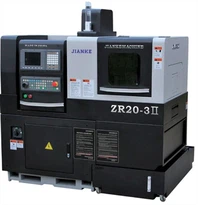
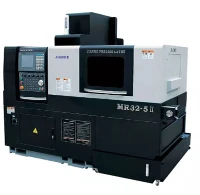
In the realm of precision machining, the 3-axis lathe stands as a cornerstone of modern manufacturing. At the heart of its functionality lies the lead screw, a component that plays a pivotal role in ensuring accurate and efficient operations. As a supplier of 3-axis lathes, I have witnessed firsthand the significance of the lead screw in shaping the performance and capabilities of these machines.
Understanding the Basics of a 3-Axis Lathe
Before delving into the role of the lead screw, it is essential to have a clear understanding of what a 3-axis lathe is. A 3-axis lathe is a machine tool that allows for the machining of cylindrical workpieces. It operates on three axes: the X-axis (cross-slide), the Z-axis (longitudinal slide), and the C-axis (spindle rotation). These axes work in tandem to enable a wide range of machining operations, including turning, facing, threading, and grooving.
The Function of the Lead Screw
The lead screw is a crucial component of the 3-axis lathe's feed mechanism. It is a threaded rod that converts rotational motion into linear motion, allowing the cutting tool to move along the X and Z axes. The lead screw is typically driven by a motor, which rotates it at a specific speed. As the lead screw rotates, it engages with a nut that is attached to the slide or carriage, causing the slide to move in a linear direction.
One of the primary functions of the lead screw is to control the feed rate of the cutting tool. The feed rate refers to the speed at which the cutting tool moves along the workpiece. By adjusting the rotational speed of the lead screw, the operator can precisely control the feed rate, ensuring that the cutting tool removes material at the desired rate. This is particularly important in applications where precision is critical, such as in the manufacturing of high-precision components.
Another important function of the lead screw is to maintain the accuracy of the machining process. The lead screw is designed to have a high degree of precision, with tight tolerances on its thread pitch and diameter. This ensures that the cutting tool moves in a straight line and at a consistent speed, resulting in accurate and repeatable machining results. Additionally, the lead screw helps to minimize backlash, which is the play or clearance between the lead screw and the nut. Backlash can cause inaccuracies in the machining process, so it is important to minimize it as much as possible.
Types of Lead Screws
There are several types of lead screws used in 3-axis lathes, each with its own advantages and disadvantages. The most common types of lead screws include:
- Acme Lead Screws: Acme lead screws are the most widely used type of lead screw in 3-axis lathes. They have a trapezoidal thread profile, which provides a high degree of efficiency and load-carrying capacity. Acme lead screws are relatively easy to manufacture and are available in a wide range of sizes and pitches.
- Ball Screws: Ball screws are a more advanced type of lead screw that uses ball bearings to reduce friction and improve efficiency. Ball screws are typically more expensive than Acme lead screws, but they offer higher precision and smoother operation. They are commonly used in high-precision applications where accuracy is critical.
- Roller Screws: Roller screws are similar to ball screws, but they use rollers instead of ball bearings. Roller screws offer even higher load-carrying capacity and efficiency than ball screws, but they are also more expensive. They are typically used in applications where high loads and high speeds are required.
Importance of Lead Screw Maintenance
Proper maintenance of the lead screw is essential to ensure the long-term performance and reliability of the 3-axis lathe. Over time, the lead screw can wear out due to friction and normal use, which can lead to decreased accuracy and performance. To prevent this, it is important to regularly lubricate the lead screw and to keep it clean and free of debris. Additionally, it is important to check the lead screw for signs of wear and to replace it if necessary.
Impact on Machining Performance
The quality and performance of the lead screw can have a significant impact on the overall machining performance of the 3-axis lathe. A high-quality lead screw can provide smooth and precise motion, resulting in better surface finish and dimensional accuracy. On the other hand, a low-quality lead screw can cause vibrations, chatter, and other issues that can affect the quality of the machined parts.
In addition to the quality of the lead screw, the design and configuration of the lead screw system can also affect the machining performance. For example, the lead screw pitch and the number of starts can have an impact on the feed rate and the cutting force. A larger lead screw pitch can provide a higher feed rate, but it may also require a higher cutting force. Therefore, it is important to choose the right lead screw pitch and configuration based on the specific machining requirements.


Applications in Different Industries
3-axis lathes with lead screws are widely used in a variety of industries, including automotive, aerospace, medical, and electronics. In the automotive industry, 3-axis lathes are used to manufacture engine components, such as pistons, crankshafts, and camshafts. In the aerospace industry, 3-axis lathes are used to manufacture aircraft parts, such as landing gear components and turbine blades. In the medical industry, 3-axis lathes are used to manufacture medical devices, such as surgical instruments and implants. In the electronics industry, 3-axis lathes are used to manufacture electronic components, such as connectors and sockets.
Comparison with Other Feed Mechanisms
While the lead screw is a popular feed mechanism in 3-axis lathes, there are other feed mechanisms available, such as linear motors and belt drives. Each feed mechanism has its own advantages and disadvantages, and the choice of feed mechanism depends on the specific application requirements.
Linear motors offer high speed and high acceleration, making them suitable for applications where rapid movement is required. However, linear motors are typically more expensive than lead screws and require more complex control systems. Belt drives are a more cost-effective alternative to lead screws, but they may not provide the same level of precision and accuracy.
Future Trends in Lead Screw Technology
As technology continues to advance, the lead screw technology is also evolving. One of the future trends in lead screw technology is the development of high-precision lead screws with improved efficiency and reliability. These lead screws are designed to provide even higher levels of accuracy and performance, making them suitable for a wider range of applications.
Another future trend in lead screw technology is the integration of smart sensors and control systems. These sensors can monitor the performance of the lead screw and provide real-time feedback to the operator. This can help to improve the efficiency and accuracy of the machining process and reduce the risk of downtime.
Conclusion
In conclusion, the lead screw plays a vital role in the operation of a 3-axis lathe. It is responsible for controlling the feed rate of the cutting tool and maintaining the accuracy of the machining process. By understanding the function and importance of the lead screw, operators can ensure that their 3-axis lathes are operating at peak performance.
If you are in the market for a 3-axis lathe, we invite you to explore our range of products. We offer a variety of Single Spindle And Multi Spindle Automatic Lathe, Double Spindle CNC Lathe, and 6 Axis Lathe to meet your specific machining needs. Our experienced team is ready to assist you in selecting the right machine for your application and to provide you with the support and service you need to ensure its success. Contact us today to learn more about our products and to discuss your requirements.
References
- "Machinery's Handbook," 31st Edition, Industrial Press Inc.
- "CNC Programming Handbook," Third Edition, by Peter Smid
- "Precision Machining Technology," 6th Edition, by John A. Reha